Rights Respecting School Award

Our Rights Respecting School Journey

What Is It, And Why Are We Taking Part?

At Rathmore Primary School, our aim is to ensure pupils become:

  • Successful learners
  • Confident individuals
  • Responsible citizens

With this in mind, the school is working towards becoming a re-accredited Silver Aware UNICEF Rights Respecting School in November 2024. This award aims to embed further our school ethos and practice to ensure our children have a safe place to learn, where they are respected, their talents are nurtured, and they are able to thrive, whilst giving children the best chance to lead happy, healthy lives and to be responsible, active citizens.

What is a Rights Respecting School?

The Rights Respecting Schools Award recognises schools that place children’s rights at the heart of their school.  It is an award delivered by UNICEF, the world’s leading organisation for children and young people, promoting the rights and well-being of every child, in everything they do.  You can find more information about UNICEF and their work with schools here.

What are children’s rights?

In 1989, governments worldwide promised all children the same rights by adopting the UN Convention on the Rights of the Child.

The Convention recognised that all children have the right to be treated with dignity and fairness, to be protected to develop their full potential and participate. The rights in the Convention describe what a child needs to survive, grow and live up to their potential in the world. They apply equally to any child, no matter who they are or where they came from.

The Convention has changed the way children are viewed and treated—in other words, as human beings with a distinct set of rights instead of as passive objects of care and charity. It is the most widely ratified human rights treaty- only the United States has not ratified it. The UK signed up to the UN Conventions on the Right of the Child in 1991.

The rights of children are referred to in the convention, as articles.  Click here to view a list of the articles.

What does the Award involve?

The Right Respecting Schools Award (RRSA) recognises achievement in putting the United Nations Convention on the Rights of the Child (CRC) at the heart of a school’s planning, policies, practice and ethos.

Find copies of the CRC here: https://www.unicef.org/child-rights-convention

For a school to receive accreditation, it must evidence that it has reached the three RRSA Strands:

Schools involved in the Rights Respecting Schools Award work towards three levels:

  • Bronze – Rights Committed – The first stage of the Rights Respecting Schools Award.
  • Silver – Rights Aware – The second stage of the Rights Respecting Schools Award.
  • Gold – Rights Respecting – The highest stage of the Rights Respecting Schools Award (after Bronze: Rights Committed and Silver: Rights Aware). It is granted by UNICEF UK to schools that have fully embedded children’s rights throughout the school in its policies, practice and ethos, as outlined in the three RRSA Strands.

Find out more about the UNICEF Rights Respecting School Award here: https://www.unicef.org.uk/rights-respecting-schools/
What does Rights Respecting look like at Rathmore?

  • Our pupils learn about rights through assemblies and Personal Development and Mutual Understanding (PDMU) lessons.
  • Pupils consider rights when interacting with their peers and resolving conflicts.
  • Through playground and classroom charters, pupils and adults understand how to ensure that everyone makes the most of their education and break times positively.
  • Both adults and pupils ensure that everyone in the school is treated with respect and dignity.
  • Our groups of Rights Respecting School Ambassadors ensure that all pupils in the school have a say in school decisions, where appropriate.
  • Pupils are encouraged to discuss rights in all aspects of their learning and reading materials.
  • Pupils learn about different charities and how they support children around the world.
  • Pupils take part in various campaigns for children’s rights locally and globally.

Rights Respecting Ambassadors 

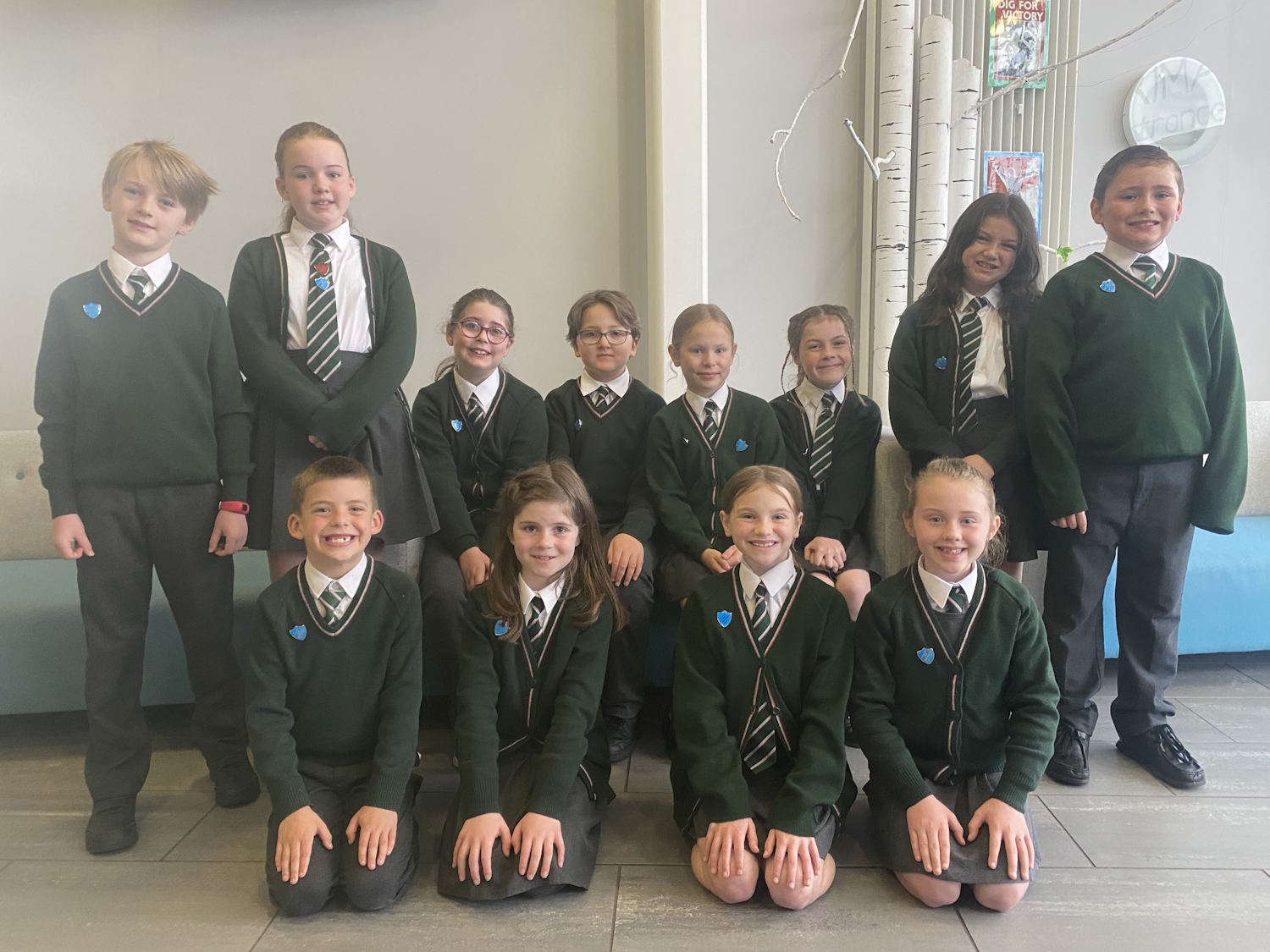
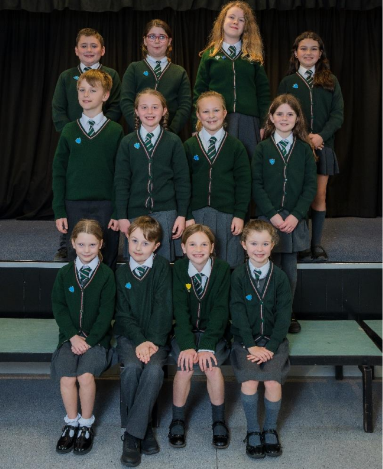
Our ambassadors were invited to apply for their position and have been elected by their peers through a democratic voting process.

The Ambassadors are elected to be promoters of pupil voice; their job is to help ensure that Rathmore Primary School is a safe and happy place for all to learn in. They are also champions of rights, and they ensure that the rights are promoted and discussed in their classes.

Rights Respecting Schools Award (RRSA)

The RRSA recognises achievement in putting the Convention on the Rights of the Child (UNCRC) at the heart of our school’s practice to improve wellbeing and help all children realise their potential.
The award is based on principles of equality, dignity, respect, non-discrimination and participation. The initiative started in 2006 and schools involved in the Award have reported a positive impact on relationships and wellbeing, leading to better learning and behaviour, improved academic standards and less bullying.

We are delighted to have achieved our Silver Award.

Rights Respecting Schools Award (RRSA)

The RRSA recognises achievement in putting the Convention on the Rights of the Child (UNCRC) at the heart of our school’s practice to improve wellbeing and help all children realise their potential.
The award is based on principles of equality, dignity, respect, non-discrimination and participation. The initiative started in 2006 and schools involved in the Award have reported a positive impact on relationships and wellbeing, leading to better learning and behaviour, improved academic standards and less bullying.

We are delighted to have achieved our Silver Award.

The UN Convention on The Rights of the Child

In 1989, governments across the world adopted the UNCRC, recognising that all children have the right to be treated with dignity and fairness, to be protected, to develop to their full potential and to participate. The Convention sets out the civil, political, economic, social and cultural rights that everyone under 18 is entitled to.

There are 42 Articles that relate to our children, set out under four broad headings.

General Articles

Everyone under the age of 18 has all the rights in the Convention.

The Convention applies to every child without discrimination, whatever their race, gender, religion, language or abilities, whatever they think or say, whatever family they come from.

The best interests of the child must be a top priority in all decisions and actions that affect children.

Every child has the right to life. Governments must do all they can to ensure that children survive and develop to their full potential.

Every child has the right to have a say in all matters affecting them, and to have their views considered and taken seriously. This right applies at all times.

Survival & Development Articles

Governments must do all they can to make sure every child can enjoy their rights.

Governments must respect the rights and responsibilities of parents and carers to direct and guide their children as they grow up, so that they can enjoy their rights properly.

Every child has the right to life. Governments must do all they can to ensure that children survive and develop to their full potential.

Every child has the right to be registered at birth, have a legal name and nationality, as well as the right to know and, as far as possible, to be cared for by their parents.

Every child has the right to an identity. Governments must respect and protect that right, and prevent the child’s name, nationality or family relationships from being changed unlawfully.

Children must not be separated from their parents unless it is in their best interests. Children whose parents have separated have the right to stay in contact with both parents, unless this might hurt the child.

Governments must act quickly and sympathetically if a child or their parents want to live together in the same country. If a child’s parents live apart in different countries, the child has the right to visit both of them.

Every child has the right to think and believe what they want and to practise their religion, as long as they are not stopping other people from enjoying their rights. Governments must respect the rights of parents to give their children information about this right.

Both parents share responsibility for bringing up their child and should always consider what is best for the child. Governments must support parents by giving them the help they need, especially if the child’s parents work.

If a child cannot be looked after by their family, governments must make sure that they are looked after properly by people who respect the child’s religion, culture and language.

If a child is a refugee or is seeking refuge, governments must make sure that they have the same rights as any other child. Governments must help in trying to reunite child refugees with their parents.

A child with a disability has the right to live a full and decent life with dignity and independence, and to play an active part in the community. Governments must do all they can to provide support to disabled children.

Every child has the right to the best possible health. Governments must provide good quality health care, clean water, nutritious food, a clean environment and education on health and wellbeing so that children can stay healthy. Richer countries must help poorer countries achieve this.

If a child lives away from home (e.g. in care, hospital or in prison), they have have the right to a regular check of their treatment and the way they are cared for.

Governments must provide extra money for the children of families in need.

Every child has the right to a standard of living that is good enough to meet their physical, social and mental needs. Governments must help families who cannot afford to provide this.

Every child has the right to an education. Primary education must be free. Secondary education must be available for every child. Discipline in schools must respect children’s dignity. Richer countries must help poorer countries achieve this.

Education must develop every child’s personality, talents and abilities to the full. It must encourage the child’s respect for human rights, as well as respect for their parents, their own and other cultures, and the environment.

Every child has the right to learn and use the language, customs and religion of their family, regardless of whether these are the shared by the majority of the people in the country where they live.

Every child has the right to relax, play and take part in a wide range of cultural and artistic activities.

Governments should make the Convention known to children and adults.

Participation Articles

Governments must do all they can to make sure every child can enjoy their rights.

Every child has the right to have a say in all matters affecting them, and to have their views considered and taken seriously. This right applies at all times.

Every child must be free to express their thoughts and opinions and to access all kinds of information, as long as it is within the law.

Every child has the right to think and believe what they want and to practise their religion, as long as they are not stopping other people from enjoying their rights. Governments must respect the rights of parents to give their children information about this right.

Every child has the right to meet with other children and to join groups and organisations, as long as this does not stop other people from enjoying their rights.

Every child has the right to privacy. The law should protect the child’s private, family and home life.

Every child has the right to reliable information from the media. This should be information that children can understand. Governments must help protect children from materials that could harm them.

Governments should make the Convention known to children and adults.

Protection Articles

Governments must do all they can to make sure every child can enjoy their rights.

Governments must do everything they can to stop children being taken out of their own country illegally or being prevented from returning.

Every child has the right to reliable information from the media. This should be information that children can understand. Governments must help protect children from materials that could harm them.

Governments must do all they can to ensure that children are protected from all forms of violence, abuse, neglect and bad treatment by their parents or anyone else who looks after them.

If a child cannot be looked after by their family, governments must make sure that they are looked after properly by people who respect the child’s religion, culture and language.

If a child is adopted, the first concern must be what is best for the child. All children must be protected and kept safe, whether they are adopted in the country where they were born or in another country.

If a child is a refugee or is seeking refuge, governments must make sure that they have the same rights as any other child. Governments must help in trying to reunite child refugees with their parents.

Governments must protect children from work that is dangerous or might harm their health or education.

Governments must protect children from the use of illegal drugs.

Governments must protect children from sexual abuse and exploitation.

Governments must ensure that children are not abducted or sold.

Governments must protect children from all other forms of bad treatment.

No child shall be tortured or suffer other cruel treatment or punishment. A child should be arrested or put in prison only as a last resort and then for the shortest possible time. Children must not be in a prison with adults. Children who are locked up must be able to keep in contact with their family.

Governments must do everything they can to protect and care for children affected by war. Governments must not allow children under the age of 15 to take part in war or join the armed forces.

Children neglected, abused, exploited, tortured or who are victims of war must receive special help to help them recover their health, dignity and self-respect.

A child accused or guilty of breaking the law must be treated with dignity and respect. They have the right to help from a lawyer and a fair trial that takes account of their age or situation. The child’s privacy must be respected at all times.

If the laws of a particular country protect children better than the articles of the Convention, then this laws must stay in place.

Printable Versions of UNCRC

CHILD VERSION

ADULT VERSION

Rights Respecting School

Our Journey to Gold

UNICEF is recognised globally as the leading organisation championing children’s rights. The Rights Respecting Schools Award (RRSA) is given to schools that show a strong commitment to promoting children’s rights and ensuring that both adults and pupils value and respect the rights of others. A Silver Award is presented to schools that demonstrate significant progress in embedding the principles of the UN Convention on the Rights of the Child (UNCRC) into their ethos, curriculum, planning and everyday practice. In a Rights Respecting School, children learn about their rights, see them modelled by adults and experience them being upheld throughout the school community.

At Rathmore Primary School, we take great pride in being part of the Rights Respecting Schools programme. Working alongside UNICEF, we aim to ensure that children’s rights are understood, celebrated and actively lived out across our school. The RRSA framework supports us in placing the UNCRC at the centre of our policies, relationships and culture.

We achieved our Silver: Rights Aware accreditation in May 2025, becoming one of only 16 schools in Northern Ireland to hold this award. We are now working towards the Gold: Rights Respecting level.

Achieving Gold means demonstrating that children’s rights are firmly embedded in every aspect of school life, not only taught, but consistently practised, championed and used to guide decision-making.

Our journey towards Gold is a whole-school effort, with our Rights Respecting Ambassadors, staff, governors and the wider Rathmore community all playing an important role in helping children’s rights strengthen throughout our school.

Pupil Voice — Article 12: The Right to Be Heard

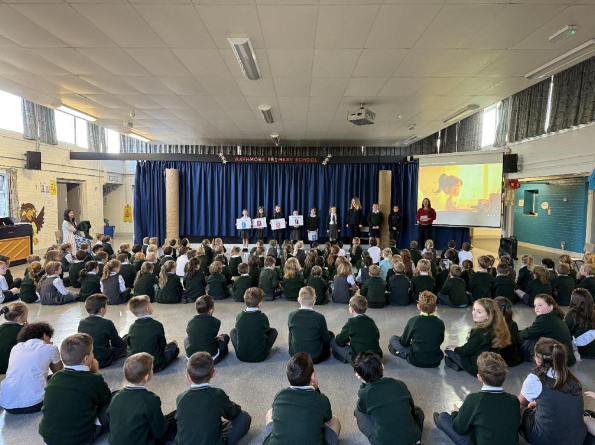
Our Rights Respecting Ambassadors began the year by leading a whole-school assembly on Article 12, which states that every child has the right to express their views and have them taken seriously. They introduced the ABCDE of Rights and helped set the tone for our Rights Respecting learning throughout the year.


Anti-Bullying Week — Article 19: The Right to Be Safe

During Anti-Bullying Week, our Ambassadors led an assembly focused on Article 19, reminding everyone that every child has the right to feel safe, respected and protected from harm. They highlighted the adults and systems in place to support pupils and encouraged everyone to speak up if they witness unkind behaviour.

Rights Around Our School — Article 24: The Right to Clean Water

As part of ensuring rights are visible in our environment, Ambassadors completed a Rights Respecting walk-through of the school. New displays were added across the building, including posters beside water fountains highlighting Article 24, the right to clean drinking water.

UNICEF OutRight Campaign — Article 6 & Article 22: The Right to Life, Survival & Protection in Emergencies

Our P4 Ambassadors took part in this year’s UNICEF OutRight Campaign, learning about why international aid is vital and how children’s rights must be protected during crises. This work links strongly with Article 6 (the right to life and development) and Article 22 (protection for children in emergency situations).

Local Community Engagement — Article 12: The Right to Have a Say in Decisions

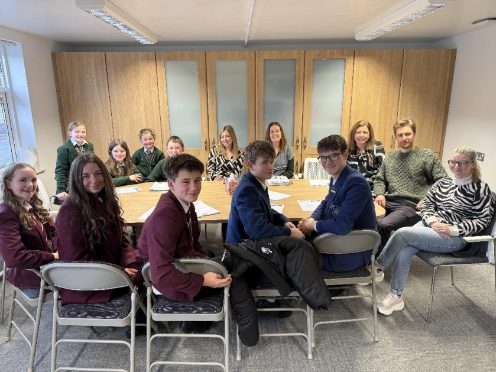
At the end of January, some Ambassadors met with members from the Ards and North Down Borough Council and pupils from Strangford College to discuss how the borough could become more child-friendly. This gives pupils a real opportunity to use their voice beyond school, demonstrating Article 12 in action.


Visit from NICCY — Article 4: Duty of Government to Uphold Rights

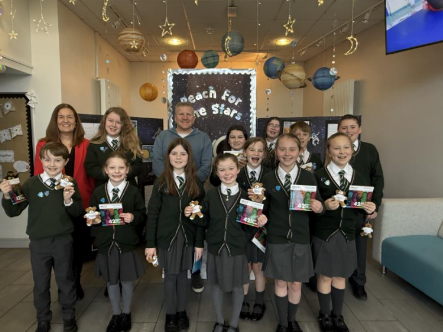
In February, our Rights Respecting Ambassadors proudly showcased their ongoing work as we welcomed Chris Quinn, Northern Ireland’s Commissioner for Children and Young People. During the visit, pupils demonstrated how children’s rights are embedded throughout school life—how they learn, how they treat one another and how they take action in their community.

To recognise their outstanding leadership, each Ambassador received a special ‘Rights Defender’ badge from the Commissioner. The visit was an inspiring and encouraging experience for pupils and staff alike, celebrating our continued commitment to fostering a caring, inclusive and rights-respecting environment for all.

This visit supports Article 4, which requires government and public bodies to ensure children’s rights are realised.

Community Day — Linking to Articles 29 and 6

At our Community Day, our Rights Respecting Ambassadors will be running a fun and engaging competition, “Who can name the most children’s rights?”, and a fundraising stall to support the UNICEF Shop. This connects closely to Article 6, the right to life, survival and development, as the resources purchased through UNICEF help protect children’s health, safety and wellbeing around the world.

The money raised will help provide essential items such as:

  • Soap to support cleanliness and good health
  • Blankets to keep babies warm and safe
  • School supplies so children everywhere can access education
  • Clean water kits to ensure families have safe drinking water
  • Vaccines and first-aid supplies that protect children from illness and disease

Through these activities, pupils are not only learning about their rights but actively upholding the rights of others, showing empathy, global awareness and a strong sense of responsibility.